
Cenotes in Yucatan
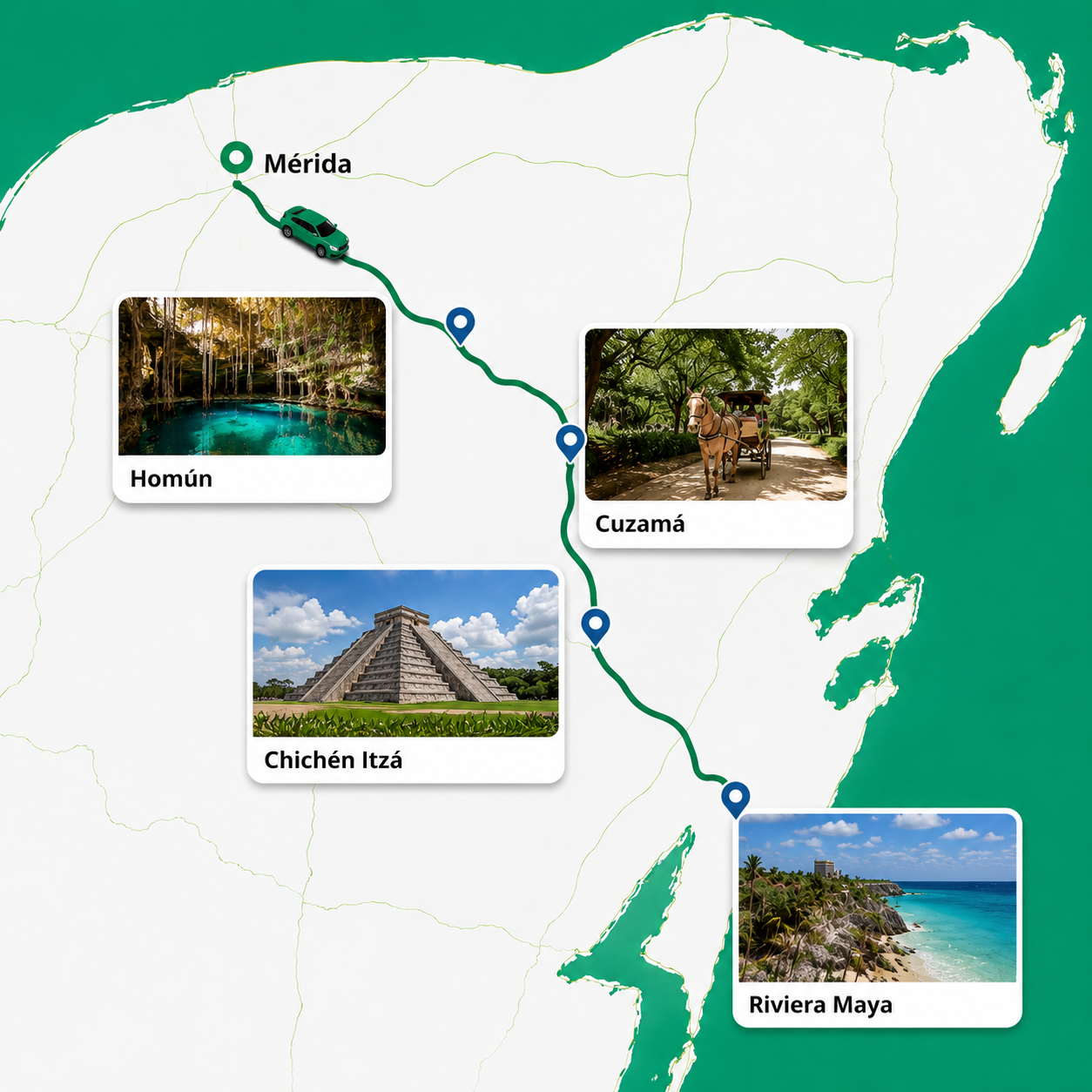
Majestic natural formations sacred to the Maya. With Mérida as your starting point, easily explore the routes of Homún, Cuzamá, Chichén Itzá, and the Riviera Maya. Renting a car with Enterprise gives you the freedom to discover these mystical landscapes at your own pace.
Discover the cenotes of the Yucatan Peninsula
Cenotes in the Yucatan Peninsula: Routes and Recommendations
Cenotes are natural settings that remained hidden beneath the jungle for thousands of years and today represent one of the most incredible experiences you can have in Mexico.
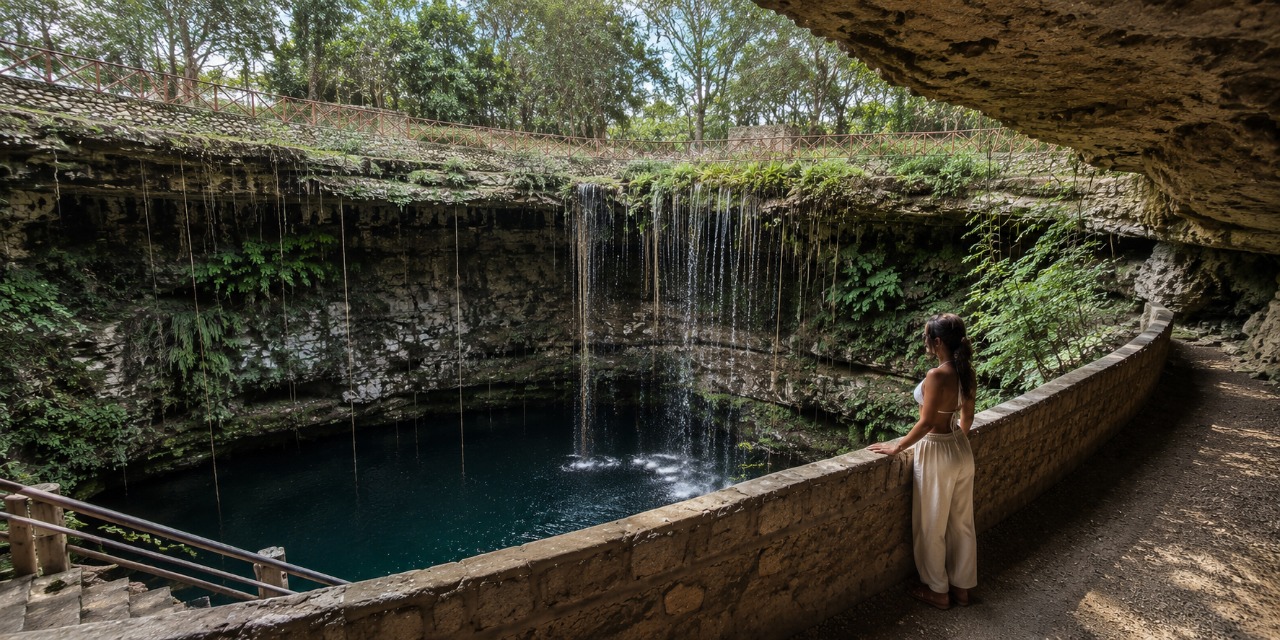
Unlike a beach or a lagoon, each cenote has a distinct personality. Some remain completely open and surrounded by vegetation; others are hidden inside caverns illuminated only by small beams of light piercing through the rock. There are also those where the water reaches such clarity that it is possible to observe every formation on the bottom as if you were floating in the air.
Exploring the Mexican cenotes means discovering an essential part of the natural and cultural history of the Yucatan Peninsula. For centuries, these formations were an important source of fresh water for the Mayan civilization, and many of them continue to be considered sacred places.
If it is your first time in the region, the best recommendation is to use the city of Mérida, Yucatan, as your starting point. In addition to having excellent air and road connectivity, its location allows you to organize routes to the cenotes near Chichén Itzá, as well as to Valladolid, Homún, Cuzamá, or even continue your journey toward the Riviera Maya.
What are cenotes and why do they only exist in certain regions of Mexico?
Although today they are one of the main tourist attractions in the Mexican southeast, cenotes began forming millions of years ago as a result of a unique geological process.
The Yucatan Peninsula is primarily made of limestone, a porous material that, over time, allowed rainwater to seep through and slowly dissolve the subsoil. This phenomenon gave rise to enormous underground caverns that, upon partially collapsing, exposed bodies of crystal-clear water known as cenotes.
For this reason, the largest concentration of cenotes in the world is found precisely in this region of Mexico, where it is estimated that thousands exist, although many of them still remain unexplored.
For the Mayan culture, these places were much more than a water source. They were considered portals to the underworld and spaces intended for religious ceremonies, which is why some cenotes still retain enormous archaeological and spiritual value.
Where are the most famous cenotes in the Yucatan Peninsula located? Although they are usually associated solely with Cancun or the Riviera Maya, the reality is that cenotes are distributed throughout a large part of the Yucatan Peninsula. Depending on the type of trip you want to take, you can organize different routes:
- Homún and Cuzamá: Two of the areas with the highest concentration of open and semi-open cenotes, ideal for visiting several in a single day.
- Valladolid: An excellent starting point to combine cenotes, gastronomy, and a visit to Chichén Itzá.
- Riviera Maya: Concentrates some of the most popular cenotes for swimming, snorkeling, and diving.
- Tulum: Combines crystal-clear cenotes with beaches and archaeological sites.
Choosing a base like Mérida allows you to explore these routes little by little, avoiding excessively long journeys in a single day.
How to organize a cenote route from Mérida One of the most common mistakes is trying to visit too many cenotes in a single day. Although they seem relatively close on the map, each one requires time to enjoy, swim, rest, and explore the surroundings. Therefore, the ideal approach is to divide the trip by zones and dedicate at least one full day to each route.
Route 1: Mérida – Homún Homún is located approximately an hour and a half from Mérida and is considered one of the best places to discover different types of cenotes on the same tour. Here you will find different options managed by local communities, many of them connected by rural roads where it is still possible to travel through small towns and enjoy a much calmer atmosphere than in the busier tourist destinations. The recommendation is to leave Mérida before 8:00 a.m. to avoid the intense heat and make the most of the early hours of the day, when the cenotes receive fewer visitors.
Route 2: Mérida – Cuzamá Very close to Homún is Cuzamá, another favorite destination for those wishing to visit several cenotes on the same trip. In addition to the landscape, one of its main attractions is the traditional tour on small platforms known as "trucks," which run on old horse-drawn railway tracks and lead to different cenotes in the area. It is a unique experience that combines nature, history, and local traditions.
How much time do you need to tour the cenotes? If your goal is to truly discover the natural wealth of the Yucatan Peninsula, a single day will probably not be enough. The recommendation is to dedicate between four and five days to combine different routes and discover cenotes with completely different characteristics. A possible itinerary scenario would be:
- Day 1: Arrival in Mérida and tour of the historic center.
- Day 2: Cenote route in Homún.
- Day 3: Cenotes in Cuzamá.
- Day 4: Valladolid and cenotes near Chichén Itzá.
- Day 5: Continue to the Riviera Maya or return to Mérida.
This way, the trip becomes a much more complete experience, allowing you to discover not only some of the most spectacular cenotes in Mexico but also towns, gastronomy, and landscapes that often fall outside the traditional routes.
Cenotes near Chichén Itzá: A route that combines nature and history Visiting Chichén Itzá is an experience that practically all travelers include in their tour of the Yucatan Peninsula. However, what many do not know is that, just a few minutes from the archaeological zone, there are some of the most impressive cenotes in the region. If you leave from Mérida, it is highly recommended to start the trip before 7:00 a.m. The journey to Chichén Itzá takes approximately an hour and forty-five minutes via Federal Highway 180, a fast road in excellent condition that connects both destinations. After visiting the archaeological site, you can dedicate the rest of the afternoon to exploring one of these cenotes.
Cenote Ik Kil Located less than five minutes from Chichén Itzá, Cenote Ik Kil is probably the most famous in the region. Its completely open shape, the vegetation-covered walls, and the roots descending from the top create a spectacular setting. The water reaches a depth of nearly 40 meters (130 feet) and maintains a cool temperature almost all year round, making it ideal for swimming after touring the archaeological site.
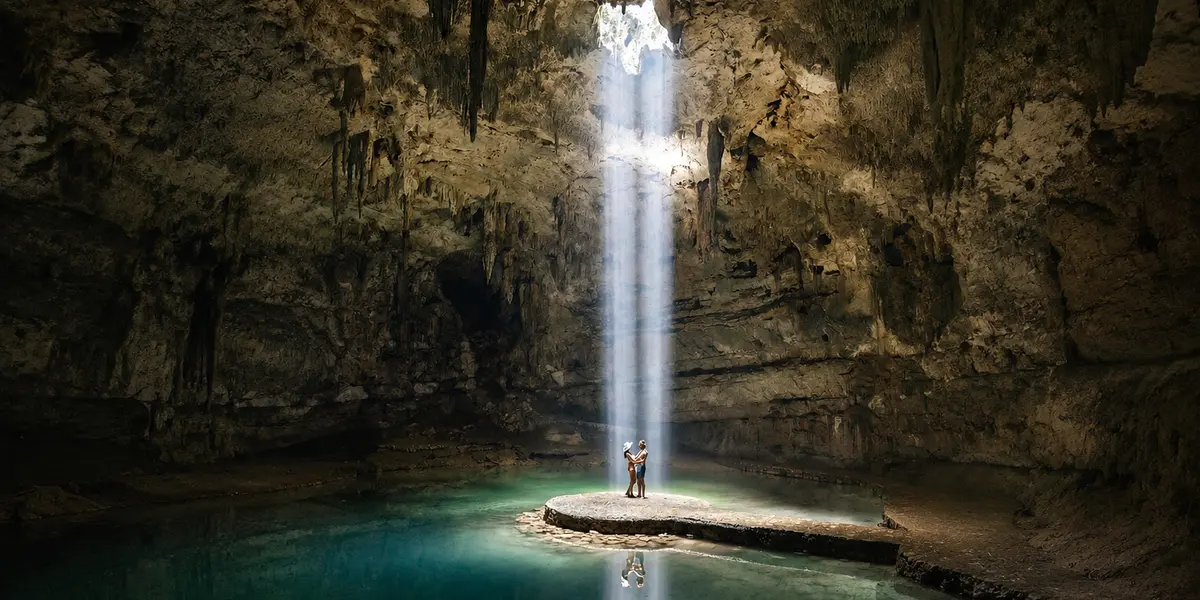
Cenote Suytun About 40 minutes from Chichén Itzá is one of the most famous cenotes on social media. Cenote Suytun stands out for the circular platform built in the center of the cavern, illuminated by a beam of natural light piercing through a small opening in the roof. Visiting this place allows you to appreciate the rock formations created over thousands of years and understand why these spaces were considered sacred by the Mayan civilization.
Cenote Oxmán Very close to Valladolid is Cenote Oxmán, an excellent alternative for those who prefer a more relaxed atmosphere. Here, enormous tree roots descend until they touch the water, creating a landscape completely different from other cenotes in the region. In addition, it has services such as a restaurant, dressing rooms, and rest areas, making it ideal for spending several hours enjoying the surroundings.
Cenotes in the Riviera Maya: Nature, adventure, and crystal-clear waters If, after touring Yucatan, you decide to continue the trip towards Quintana Roo, you will discover a completely different side of the cenotes. The cenotes in the Riviera Maya stand out for their incredibly transparent waters, their complex cavern systems, and the activities that can be done in them, such as snorkeling or diving. Federal Highway 307 easily connects destinations like Playa del Carmen, Puerto Morelos, and Tulum, so visiting several cenotes on different days is relatively simple.
Cenote Dos Ojos Considered one of the best sites in the world for cave diving, Dos Ojos is part of an enormous underground system that connects kilometers of flooded tunnels. Its name (Two Eyes) comes from the two main entrances that look like a pair of eyes when seen from the air. The transparency of the water allows you to observe stalactites, stalagmites, and rock formations with great clarity. Although it is very popular among certified divers, there are also snorkeling tours for those who want to see part of the system without needing prior experience.
Cenote Azul Located between Playa del Carmen and Puerto Aventuras, Cenote Azul is an excellent option for those traveling with family. Unlike other completely enclosed cenotes, here you will find several shallow areas, natural platforms to rest on, and ideal spaces for peaceful swimming. Its easy access and the spaciousness of the place allow you to enjoy it for several hours without the need to take specialized tours.
Cenote Jardín del Edén (Ponderosa) Surrounded by vegetation, this open cenote stands out for the intensity of its turquoise tones and the possibility of snorkeling to observe fish, turtles, and different species native to the local ecosystem. It is an excellent alternative for those who wish to combine relaxation and aquatic activities without straying too far from Playa del Carmen.
Cenote Sac Actun With over 380 kilometers of explored galleries, Sac Actun is part of the most extensive flooded cave system on the planet. Important archaeological and paleontological remains have been found here, which help us understand the history of the first inhabitants of the Yucatan Peninsula. Some tours allow you to venture into parts of these caverns, always accompanied by specialized guides and respecting strict conservation measures.
Do I need experience to dive in a cenote? It depends on the type of activity you want to do. Some cenotes offer snorkeling tours or introductory dives accompanied by certified instructors, ideal for those who have never practiced diving. On the other hand, tours through caverns or flooded caves are usually aimed exclusively at certified divers due to the particular conditions of the environment. Before booking any experience, always verify the required level and make sure to do it with authorized centers that provide the proper equipment and respect established safety measures.
Tips for visiting cenotes for the first time Although most cenotes have the infrastructure to receive visitors, there are some recommendations that can make a difference during the tour and, at the same time, contribute to the conservation of these ecosystems.
Arrive early Most cenotes open between 8:00 and 9:00 in the morning. Visiting during the earliest hours not only allows you to enjoy a much quieter atmosphere but also offers better lighting conditions to appreciate the color of the water and take photographs.
Use only biodegradable sunscreen Cenotes are extremely sensitive ecosystems. Many administrators ask you to shower before entering or to avoid chemical products that could alter the water quality. If you use sunscreen, try to ensure it is biodegradable and apply it well in advance before entering the water.
Respect the natural formations The stalactites and stalagmites you observe inside some cenotes took thousands of years to form. Avoid touching them or leaning on them during the tour. Besides being fragile, they are part of the region's natural heritage.
Bring cash Many cenotes are managed by community cooperatives or small family businesses where card payments may still be limited. Having cash will make it easier to pay for entrance fees, life jacket rentals, or food in the surrounding area.
When the trip begins in Mérida, touring the cenotes is much easier The Yucatan Peninsula offers hundreds of cenotes distributed among towns, archaeological zones, and nature reserves. Precisely because of this diversity, one of the best decisions to make the most of your trip is to establish a basecamp from which you can organize each route without constantly changing accommodations. The city of Mérida has become one of the favorite starting points for exploring the region thanks to its excellent connectivity, its proximity to destinations like Homún, Cuzamá, Valladolid, and Chichén Itzá, as well as the quality of its tourist services. If you plan to discover several cenotes during your stay, having a vehicle will allow you to make much better use of each day. Not only will you have the possibility of leaving early to avoid peak hours, but you will also be able to stop in small towns, try local cuisine, or modify your route if you discover a new cenote along the way. Enterprise Rent-A-Car Mexico has branches in Mérida, including options near the airport, making it easy to start your tour practically the moment you arrive in the city. When every day involves traveling new roads, discovering local communities, and visiting cenotes located in different parts of the peninsula, that flexibility ends up making the trip much more comfortable and enriching.
Cenotes are just the beginning of discovering the Yucatan Peninsula Perhaps the initial reason for traveling is to see some of the most famous cenotes in Mexico. But you only need to travel a few kilometers to discover that the experience goes far beyond the crystal-clear water. Along the way, you'll find old henequen haciendas, towns where Yucatecan cuisine preserves traditional recipes, markets full of crafts, and archaeological sites that help you understand the history of one of the most important civilizations in Mesoamerica. Therefore, more than just visiting a single cenote, it is worth exploring the Yucatan Peninsula as a complete road trip.